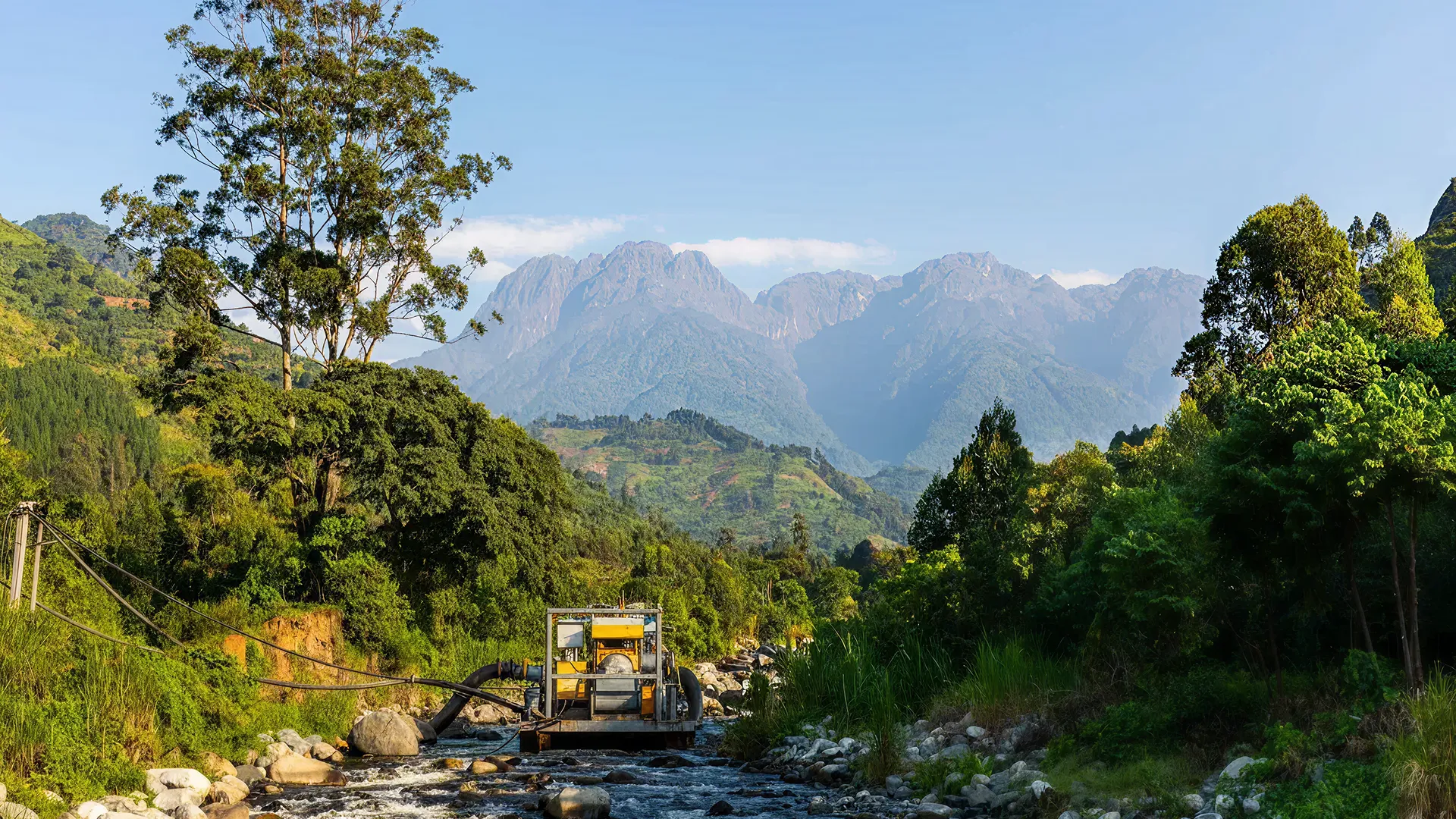

Dredging work in the DRC is rarely predictable. River widths change, banks shift, access points disappear after the rains, and sediment is never as uniform as it looks on paper. Because of this, dredge selection is usually decided on-site, not in a boardroom.

Two options keep coming up for river projects: cable-laid dredges and remote-operated dredges. On paper, both can move material. On the river, they behave very differently. One depends on mechanical positioning and physical control. The other depends on remote operation, monitoring, and reduced crew exposure.
In the DRC, this difference matters. Choosing the wrong dredging approach can slow production, complicate setup, or create safety challenges that were never planned for. The goal is not to pick the more advanced system, but the one that fits the river, the access conditions, and the way the project will actually be executed.
This blog walks you through how cable dredges and remote-operated dredges perform in real DRC river conditions and where each approach makes sense. The discussion is aligned with the pumping and dredging solutions supported by Pump and Dredge Source, focusing on practical outcomes rather than theoretical advantages.
The DRC River Reality Check (Before You Pick Any Dredge)
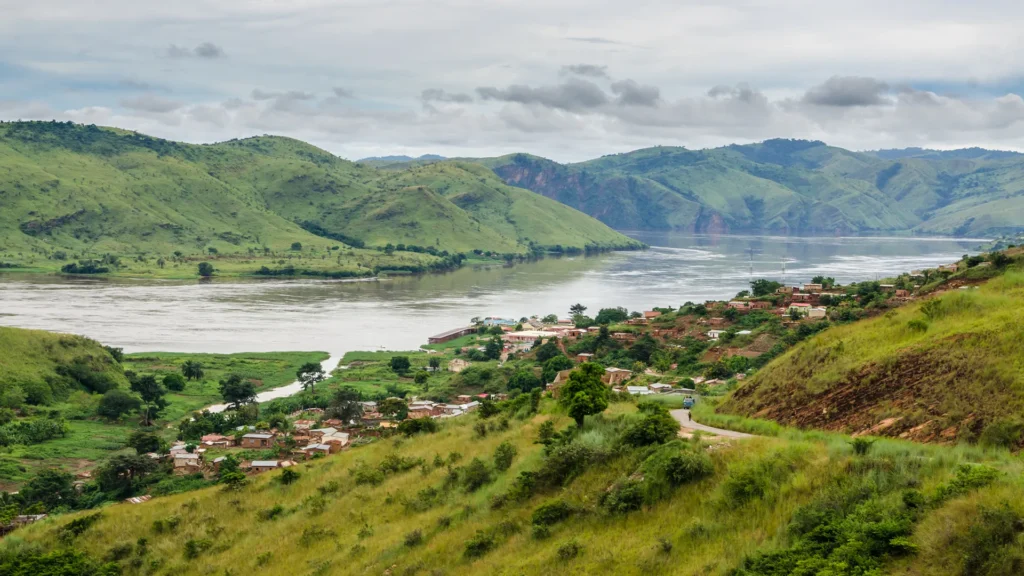
Dredging in the DRC does not happen in controlled conditions. Most river projects deal with changing water levels, uneven banks, and sediments that shift with every season. What works during low flow can become inefficient or unsafe once the rains arrive. This is why dredge selection here is less about specifications and more about how the equipment behaves once it is in the water.
Riverbeds in the DRC are rarely consistent. Sand layers can sit over fine silt, clay pockets, or organic material, and debris is common. This directly affects how stable a dredge remains, how often repositioning is required, and how predictable production rates really are. In many locations, access roads are limited or temporary, which restricts how equipment, anchors, and support systems can be mobilized and maintained.
Another factor is shoreline control. Some projects have firm banks where cables, winches, and anchors can be managed effectively. Others operate along soft or eroding banks, where setting and resetting lines can be time-consuming and risky. In these areas, keeping personnel off unstable ground becomes just as important as moving material efficiently.
Safety and continuity also play a major role. Crew exposure, visibility during long shifts, and the ability to operate in narrow or congested channels influence whether a dredging method remains viable throughout the project. This is where the operational differences between cable-laid dredges and remote-operated dredges begin to matter in real terms.
Before comparing technologies, it is essential to understand that DRC river dredging is driven by site conditions, not ideal assumptions. Any decision between cable-laid and remote-operated dredges must start with these realities, because they define what will work consistently once the project is underway.
Two Machines, Two Philosophies
On DRC river projects, the choice between dredges is rarely about which machine looks better on paper. It is about how the system behaves when operating in moving water, uneven ground, and changing conditions. Cable dredges and remote-operated dredges are built around very different operating philosophies, and that difference shows up quickly in the field.
What we mean by cable-laid dredges
Cable dredges rely on physical positioning. Cables, winches, and anchors control the dredge’s movement and cutting path. The system is straightforward and familiar to many operators, especially on river projects where mechanical control has been used for decades.
In the DRC, cable dredges are often chosen because they do not depend heavily on complex control systems. If the banks are stable and there is enough room to manage lines and anchors, these dredges can operate continuously with predictable behavior. Operators can feel how the dredge responds to changes in sediment conditions, which can be useful when material conditions shift without warning.
However, this approach assumes that crews can safely access the shoreline and manage repositioning throughout the project. When riverbanks are soft, flooded, or unstable, cable handling can slow progress and increase operational risk.
What we mean by remote-operated dredges
Remote-operated dredges remove the operator from the dredge itself. Control is handled from a safe distance, often from the shore or a protected control station. Movement, depth, and pumping are monitored through control systems rather than direct physical positioning.
In DRC river environments, this approach is often considered when safety and access become limiting factors. Remote-operated dredges can be deployed in areas where keeping personnel off the water or away from unstable banks is a priority. They also allow more controlled adjustments in tighter or sensitive zones where precision matters more than raw volume.
The trade-off is dependency. Remote-operated dredges rely on reliable power, communication, and system monitoring. In locations with inconsistent infrastructure, planning becomes critical to avoid interruptions.
Understanding these two philosophies is essential. Cable dredges emphasize mechanical simplicity and direct control. Remote-operated dredges prioritize safety, precision, and reduced exposure. In the DRC, the better option is not universal. It depends entirely on how the river, the site, and the project constraints interact once operations begin.
The “River Fit” Scorecard for the DRC- A Decision Tool
In the DRC, dredging systems succeed or fail based on how well they fit the river, not how advanced they appear. This section looks at practical decision factors that consistently influence whether cable dredges or remote dredges perform better once work starts.
Bank access and mobilization
Some river sections offer firm ground where equipment, anchors, and support systems can be staged without constant adjustment. In these cases, cable dredges are often workable because line handling and repositioning can be done efficiently. When banks remain stable throughout the season, production tends to stay predictable.
Where access is limited or temporary, the situation changes. Soft banks, erosion, or seasonal flooding can make it difficult to safely manage cables. In these conditions, remotely operated dredges reduce the need for constant shoreline intervention, allowing projects to continue without exposing crews to unstable ground.
Sediment type and consistency
DRC rivers rarely present uniform material. Sand, silt, clay, and organic matter often appear in layers or mixed pockets. Cable dredges handle consistent material well but may require frequent repositioning when resistance changes abruptly. This can affect cycle time and operator workload.
Remote dredges allow more controlled adjustments when sediment conditions shift unexpectedly. The ability to monitor performance remotely can help operators respond faster to blockages or changes in pump behavior, especially in mixed-material zones.
Precision versus throughput
When the objective is sustained volume over a wide channel, cable dredges can deliver steady output if setup conditions remain favorable. Their mechanical control suits long, repetitive passes where minor deviations are acceptable.
For targeted dredging, narrow channels, or areas near structures, remote dredges offer better control. Precision becomes more important than maximum output in these situations, particularly where over-dredging or bank disturbance must be avoided.
Power, controls, and reliability
Infrastructure availability matters more than machine capability. Cable dredges can operate with simpler control requirements, which can be an advantage in remote regions. Fewer electronic dependencies mean fewer points of failure.
Remote dredges, on the other hand, require reliable power and communication systems. When these are properly planned, the operational benefits are significant. When they are not, downtime increases quickly.
Safety and crew exposure
Safety considerations often become the deciding factor. Managing cables, anchors, and repositioning exposes crews to moving equipment and unstable terrain. In higher-risk zones, remote dredges reduce on-water and shoreline exposure, which can outweigh other operational trade-offs.
This scorecard highlights why no single dredging method fits all DRC river projects. Cable-laid dredges and remote dredges each align with different river realities, and understanding these factors early helps avoid costly adjustments later.
The “Tether Test”: When Cable-Laid Dredges Make Sense in the DRC
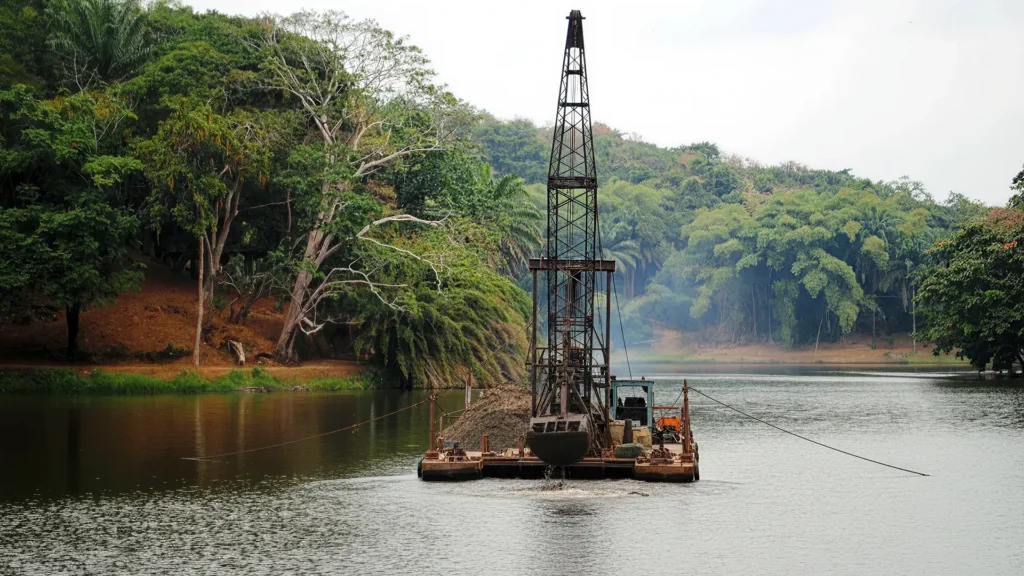
Cable-based systems still play a significant role in DRC river dredging, but only under certain conditions. The “tether test” is a simple way to evaluate whether cable-laid dredges will work efficiently or become a constraint as the project progresses.
Cable-laid dredges tend to perform well on river stretches where the banks remain accessible and reasonably stable over time. When anchors can be set without constant relocation and winch lines can be adjusted safely, the dredge can maintain a consistent working pattern. In these conditions, mechanical positioning becomes predictable rather than disruptive.
They also suit projects where the dredging path is long and repetitive. Channel deepening, navigation maintenance, and wide river sections allow cable dredges to work in steady cycles. Once the setup is established, production can remain stable with limited system complexity.
Another advantage is evident in locations with minimal infrastructure. Cable-laid dredges do not rely heavily on electronic control systems or uninterrupted communication links. This can be important in remote regions where power supply and technical support are limited. Mechanical systems are easier to troubleshoot and repair on site.
However, the tether test fails when repositioning becomes frequent. In narrow bends, variable shorelines, or areas with soft banks, managing cables can significantly slow operations. Crew exposure increases as anchors must be reset more often, and production efficiency drops.
In the DRC, cable-laid dredges are most effective when the river allows the dredge to stay tethered in a controlled and repeatable way. When that control disappears, the same system that once felt reliable can quickly become a bottleneck.
The “No-Exposure Zone”: When Remote-Operated Dredges Are the Better Choice
Some DRC river projects are defined less by material volume and more by risk. Unstable banks, deep water, poor visibility, or restricted access can turn routine dredging into a safety challenge. In these situations, remotely operated dredges often provide a more practical solution.
Remote operation reduces the need for personnel to remain on the dredge or constantly move along the shoreline. This is especially valuable where banks are soft, flooded, or eroding. By shifting control to a protected location, projects can continue without placing crews in areas where footing, visibility, or water conditions are unreliable.
These systems also perform well in confined or sensitive zones. Narrow channels, bends near infrastructure, or sections where over-dredging could destabilize the riverbed benefit from the finer control that remote dredges provide. Operators can make incremental adjustments without stopping work to manually reposition equipment.
Another advantage appears when conditions change quickly. Sudden increases in flow, debris movement, or unexpected sediment pockets require a fast response. Remote monitoring allows operators to detect performance changes early and adjust pumping or cutting behavior before problems escalate.
The trade-off is preparation. Remote dredges depend on a stable power supply and reliable control systems. When these elements are planned properly, the system reduces downtime and exposure. When they are overlooked, interruptions can outweigh the safety benefits.
In the DRC, remote dredges are not meant to replace traditional methods. They are about keeping dredging viable in locations where direct human presence creates unnecessary risk or limits long-term productivity.
Where Pump and Dredge Source Fits In
Most dredging problems in the DRC don’t come from choosing the wrong dredge on paper. They come from underestimating how the river will behave after the first few weeks.
This is usually where projects get stuck. A cable-laid dredge may be working well on one stretch, then struggle once access shifts or banks soften. A remote-operated dredge may solve the safety issue but introduce new constraints around power or setup. At that stage, changing the entire dredge system is rarely realistic.
Pump and Dredge Source typically comes into projects at this junction. Not to push one dredge type over another, but to look at what part of the system is actually limiting progress. In many DRC river jobs, the bottleneck is pumping distance, solids handling, or wear, not the dredge frame itself.
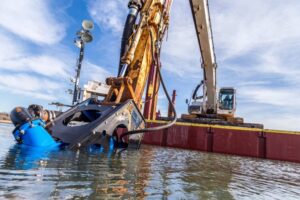
This is why cable-deployed and excavator-mounted dredge pump setups are often used alongside both cable-laid dredges and remote dredges. These configurations allow operators to keep working through sections where full repositioning would otherwise stop production.
Another factor that often gets overlooked is support. DRC river projects rarely allow for frequent shutdowns or long lead times on parts. Pump and Dredge Source focuses on equipment that can handle abrasive materials, long run hours, and on-site maintenance, not in ideal workshop conditions.
In practice, the role of Pump and Dredge Source is less about choosing sides and more about keeping dredging viable when river conditions change. That usually matters more than whether the dredge is cable-laid or remotely operated.
The Quick Best-Fit Reality Check
On DRC river projects, decisions rarely follow clean matrices. What actually matters is where time is lost and where risk builds. The points below are not theoretical strengths. They reflect where each approach tends to hold or fail once operations settle in.
If access along the riverbank is stable and crews can work the shoreline without constant repositioning, cable-laid dredges usually hold up well. They allow steady progress over long sections and do not depend on control systems that can be difficult to maintain in remote areas. When the river stays predictable, simplicity becomes an advantage.
When banks are soft, flooded, or unstable, that same simplicity can turn into a limitation. Line handling slows down work and increases exposure. In these zones, remote dredges tend to perform better because the operation does not depend on people staying close to the water or moving anchors repeatedly.
For projects focused on volume rather than accuracy, cable dredges generally deliver consistent output once they are set up. They suit maintenance dredging and wide channels where minor variation in cut is acceptable and stopping to reposition is not frequent.
Where precision matters, remote dredges are usually easier to control. Tight bends, work near structures, or sections where over-dredging could create new problems benefit from remote control and real-time monitoring. The trade-off is reliance on power and communication. When those fail, work stops.
Safety is often the deciding factor. Managing cables and anchors exposes crews to moving equipment and unstable ground. In higher-risk areas, remote dredges reduce that exposure. In lower-risk zones, the added complexity may not justify the change.
This is why there is no universal answer for the DRC. Cable-laid dredges work best when the river allows them to stay simple. Remote dredges work best when the river refuses to cooperate.
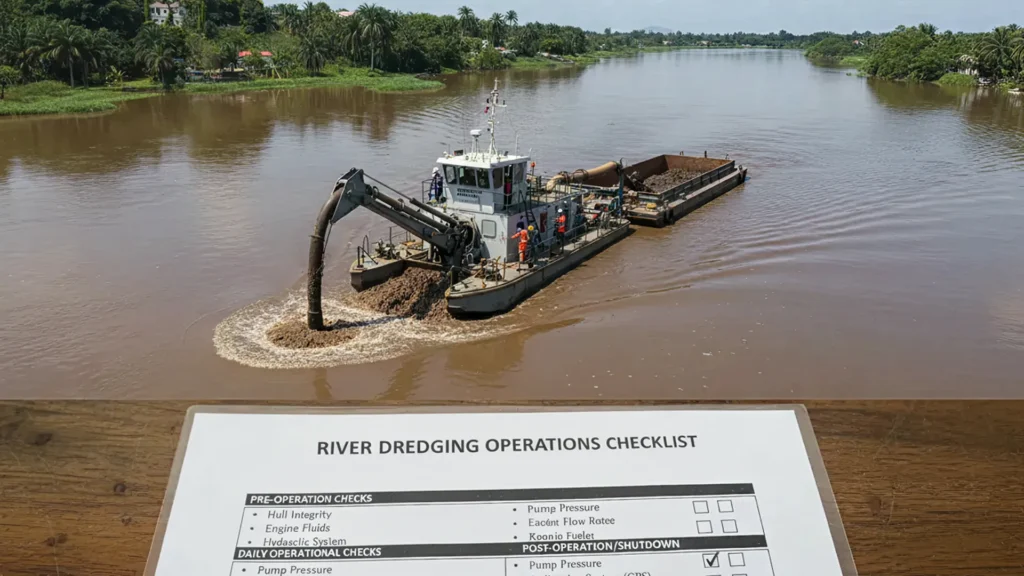
Buyer Checklist for DRC River Dredging
Before committing to cable dredges or remote dredges, most problems can be spotted by asking a few uncomfortable questions. These are the questions project teams in the DRC usually wish they had answered earlier.
Start with the river itself. How often does the water level change during the working season, and how much of the riverbank will still be usable after the first few weeks? If access is expected to shift, any dredging method that depends heavily on shoreline control will feel the impact quickly.
Next, look at the material, not just the depth. Mixed sediment, organic matter, and debris increase wear and blockages. If downtime for cleaning or maintenance is hard to manage, pumping configuration and solids handling may matter more than the dredge type.
Safety should be evaluated honestly. If crews will need to work close to unstable banks or reposition equipment frequently, exposure increases. In these cases, remote dredges often reduce operational risk. If access is stable and visibility is good, cable-laid dredges may remain practical.
Infrastructure is another limiting factor. Reliable power, control systems, and communications are essential for remote dredges. If these cannot be guaranteed, mechanical simplicity becomes valuable. Ignoring this reality usually leads to stoppages that were not planned for.
Finally, consider support and maintenance. Parts availability, on-site repair capability, and wear resistance determine whether the operation stays productive. If these elements are unclear, the dredge choice alone will not save the project.
If you cannot answer at least a few of these questions with confidence, the issue is not whether to choose cable dredges or remote dredges. The issue is that the project is not yet ready for a fixed dredging decision.
Closing: Choose the System That Survives the River, Not the One That Looks Better
In the DRC, rivers decide how dredging projects unfold. Equipment that performs well during planning can struggle once water levels shift, banks erode, or access disappears. This is why the choice between cable-laid dredges and remote dredges should never be made in isolation.
Cable-laid dredges remain effective where conditions allow mechanical control to stay consistent. Remote-operated dredges become valuable when safety, access, or precision begin to limit traditional approaches. Neither option is inherently better. Each succeeds only when it aligns with how the river behaves over time.
The more reliable approach is to focus on adaptability. Systems that can handle changing material, limited access, and long operating hours outperform those chosen purely on specifications. In many DRC river projects, keeping dredging viable matters more than committing to a single method.
Pump and Dredge Source supports this approach by helping align dredging and pumping systems with real site conditions. The objective is not to promote one dredge type, but to reduce downtime, risk, and rework as river conditions evolve.
In the end, the best dredging solution for the DRC is the one that continues working after the river changes its mind.