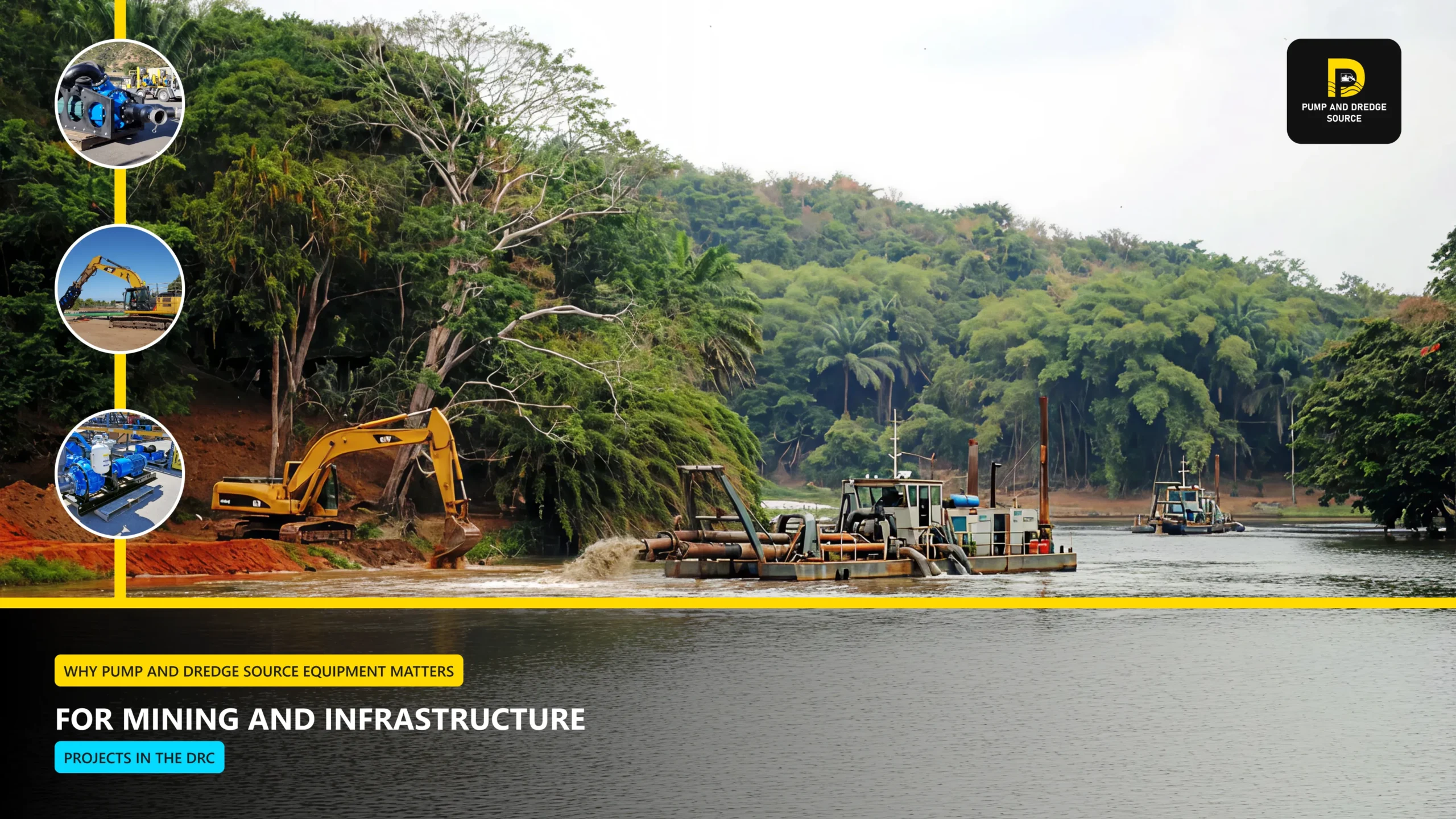

Mining and construction activity in the Democratic Republic of the Congo depends heavily on effective dredging to keep sites operational. From managing sediment and slurry in mining zones to stabilizing ground conditions for roads, channels, and water systems, DRC dredging equipment directly affects whether projects move forward on schedule or face repeated disruptions.

Mining operations across the DRC rely on mining dredging solutions to control tailings, remove accumulated sediment, and maintain access to active work areas. Without equipment designed to handle abrasive materials and to operate continuously, dredging quickly becomes a bottleneck rather than a support function. The same applies to infrastructure dredging projects, where unreliable dredging systems can delay site preparation, compromise foundations, and increase overall project risk.
Because many projects operate in remote locations with limited access to replacement parts or technical support, dredging equipment must be sourced with long-term reliability in mind. Selecting the right DRC dredging equipment is therefore not just a technical decision. It is a practical business decision that affects productivity, cost control, and execution certainty.
This is where Pump and Dredge Source becomes relevant for mining and infrastructure projects in the DRC. By supplying dredging equipment selected for local conditions and application demands, the company supports mining dredging solutions and infrastructure dredging projects that require dependable performance rather than short-term fixes.
DRC Site Conditions That Define Dredging Equipment Requirements
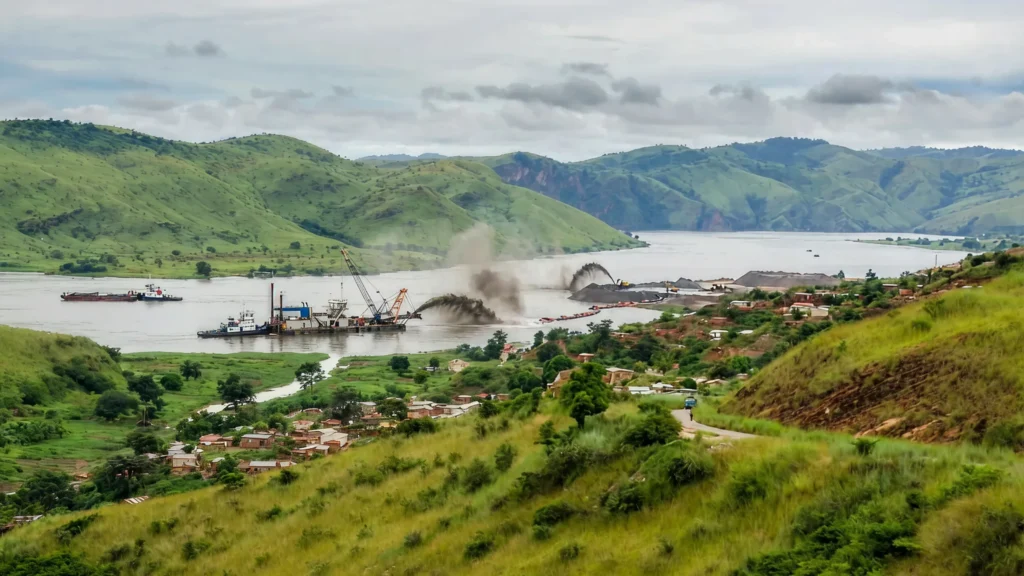
Dredging work in the Democratic Republic of the Congo is shaped by site conditions that place sustained pressure on equipment. Dredging equipment is commonly deployed in mining zones near rivers, low-lying excavation areas, and infrastructure corridors where sediment movement is constant and unpredictable. These environments require dredging systems that can operate reliably under variable loads and changing material characteristics.
For mining operators, mining dredging solutions must handle a mix of fine silt, coarse solids, and slurry generated during extraction and processing. Dredging equipment not designed for high-solids content often experiences rapid wear, reduced flow efficiency, and frequent shutdowns. In remote mining locations, even minor equipment failures can translate into extended downtime due to limited access to spare parts and service support.
Infrastructure dredging projects face similar challenges. Canal construction, road development, water management systems, and site preparation works often involve continuous sediment removal. Infrastructure dredging projects depend on consistent dredge performance to maintain stable working conditions and prevent rework. When dredging equipment cannot keep pace with sediment accumulation, project schedules are quickly affected.
These conditions make equipment selection critical. DRC dredging equipment must be specified based on solids-handling capability, durability, and ease of maintenance, rather than standard capacity ratings alone. By sourcing dredging systems with these factors in mind, Pump and Dredge Source helps mining and infrastructure projects reduce operational risk and maintain steady progress across demanding site conditions.
Why Mining Dredging Solutions Must Be Application-Specific in the DRC
Mining operations in the Democratic Republic of the Congo impose significantly different demands on dredging systems than those in standard construction environments. Dredging equipment used in mining must operate continuously while handling abrasive solids, variable slurry densities, and changing production rates. This makes application-specific selection essential rather than optional.
Effective mining dredging solutions are designed around how material is actually generated and moved on site. Tailings ponds, process water channels, and excavation zones all produce different sediment profiles. Dredging equipment selected without accounting for these differences often experiences clogging, excessive wear, or unstable flow performance. Over time, this reduces throughput and increases maintenance requirements.
Another challenge is operational continuity. Mining dredging solutions in the DRC are rarely used, and when used, they are intermittent. They support ongoing extraction and processing activities and must maintain performance over long operating cycles. Equipment not built for sustained duty becomes a frequent source of downtime, especially in remote locations where repair windows are limited.
This is where sourcing plays a key role. Pump and Dredge Source supports mining dredging solutions by supplying DRC dredging equipment that is selected based on solids handling capability, wear resistance, and expected run hours. The focus is on ensuring that dredging systems match the mining application rather than forcing operations to adapt to unsuitable equipment.
By treating mining dredging as a core operational function instead of a secondary task, projects in the DRC can achieve more stable production and better control over operational risk.
Infrastructure Dredging Projects and the Need for Reliable DRC Dredging Equipment
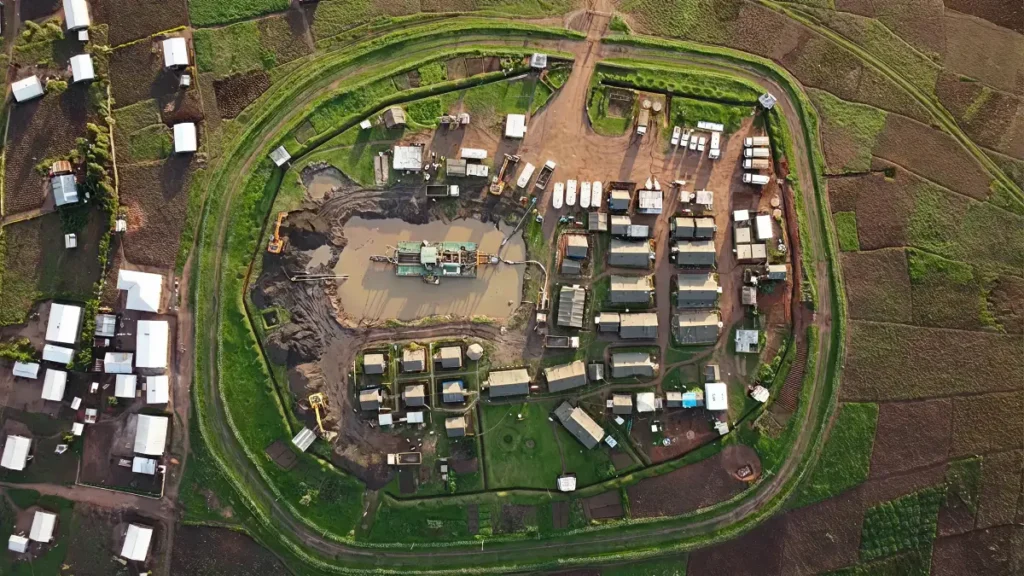
Infrastructure development in the Democratic Republic of the Congo depends heavily on dredging to create stable working conditions. Roads, drainage systems, water channels, and foundation works all require effective sediment removal and material control. In this context, infrastructure dredging projects are directly affected by the reliability and capacity of DRC dredging equipment.
Unlike short-term construction tasks, many infrastructure dredging projects in the DRC involve ongoing sediment management. Seasonal rainfall and natural water flow can quickly reintroduce silt and debris into work areas. If the dredging equipment cannot operate consistently, site preparation slows, and follow-on construction activities are delayed.
Infrastructure dredging also supports long-term asset performance. Poor sediment control during early project phases can compromise drainage systems, reduce structural stability, and increase future maintenance requirements. This makes selecting appropriate DRC dredging equipment an important decision not only for project delivery but also for asset longevity.
Pump and Dredge Source supports infrastructure dredging projects by sourcing equipment suited to extended operation and varying material conditions. By aligning dredging systems with the practical needs of infrastructure development, the company helps contractors maintain progress and reduce the risk of rework or unplanned stoppages.
In DRC infrastructure environments, dependable dredging equipment allows project teams to focus on construction rather than continuous sediment control issues.
How Pump and Dredge Source Supports DRC Dredging Equipment Selection
Sourcing dredging systems for projects in the Democratic Republic of the Congo requires more than identifying available equipment. It requires understanding how that equipment will be transported, installed, operated, and maintained over the life of the project. This is where DRC dredging equipment sourcing becomes a practical execution issue rather than a simple procurement task.
Pump and Dredge Source supports mining and infrastructure teams by aligning dredging equipment selection with real project constraints. This includes evaluating solids characteristics, expected operating hours, site accessibility, and the level of on-site technical support available. These factors directly affect how well dredging systems perform in operation.
For mining dredging solutions, this approach helps ensure that equipment can sustain continuous operation without excessive wear or frequent intervention. In mining environments where dredging supports production flow, properly sourced equipment reduces the risk of bottlenecks and unplanned shutdowns. The focus is on maintaining consistent material movement rather than reacting to equipment limitations.
The same sourcing discipline applies to infrastructure dredging projects. Equipment must be capable of handling changing sediment loads and seasonal water variations while remaining easy to operate and service. By selecting dredging systems that match these requirements, Pump and Dredge Source helps infrastructure projects maintain steady progress and predictable execution.
By treating DRC dredging equipment as a long-term operational asset rather than a short-term solution, Pump and Dredge Source supports mining and infrastructure projects that demand reliability, control, and efficiency in challenging site conditions.
Operational and Commercial Value of the Right DRC Dredging Equipment
When dredging systems are correctly sourced and deployed, the benefits extend beyond day-to-day site operations. In the Democratic Republic of the Congo, DRC dredging equipment directly influences project efficiency, cost stability, and risk management across both mining and infrastructure work.
From an operational perspective, reliable mining dredging solutions help maintain uninterrupted material movement and sediment control. Consistent dredge performance reduces unplanned stoppages and minimizes the need for corrective maintenance. This stability allows site teams to plan work sequences more accurately and maintain steady production or construction output.
There is also a clear commercial impact. Downtime on DRC projects is expensive due to logistics, mobilization challenges, and limited access to technical support. Equipment failures can delay multiple downstream activities, increasing overall project costs. Properly specified DRC dredging equipment helps limit these disruptions and supports adherence to project schedules and contractual commitments.
For infrastructure dredging projects, dependable dredging systems contribute to safer working environments and improved construction quality. Effective sediment removal supports stable foundations, reduces rework, and lowers long-term maintenance risk. These factors are especially important for infrastructure assets expected to perform over an extended service life.
By focusing on fit-for-purpose sourcing, Pump and Dredge Source helps mining and infrastructure projects realize these operational and commercial benefits. The value of the right dredging equipment is measured not only by performance metrics but also by the predictability and control it provides in complex DRC project environments.
Conclusion: DRC Dredging Equipment as a Practical Project Advantage
In mining and construction environments across the Democratic Republic of the Congo, dredging is a continuous operational requirement, not a secondary activity. Projects that depend on DRC dredging equipment must account for abrasive materials, variable water conditions, and remote operating environments from the outset. When these realities are ignored, dredging quickly becomes a source of delay and cost escalation.
Both mining dredging solutions and infrastructure dredging projects benefit from equipment selected with application requirements in mind. Reliable dredging systems support consistent material movement, stable working conditions, and better control over project schedules. This allows site teams to focus on execution rather than constant troubleshooting.
Pump and Dredge Source contributes to this advantage by sourcing dredging equipment aligned with real DRC site conditions. The emphasis is on durability, operational continuity, and ease of maintenance rather than short-term availability. This approach supports projects through multiple phases and reduces the risk associated with equipment-related interruptions.
For contractors and operators working on mining and infrastructure projects in the DRC, the right dredging equipment is not just a technical requirement. It is a practical decision that supports predictable delivery, controlled costs, and long-term project performance.